The run See every episode
Featured characters





Minor characters & crew 37 more roles


The story
Read the full synopsis 5 min
There is a lot more to Odyssey than meets the ear, and this episode goes looking for it. Instead of one new story, it opens the scrapbook and walks back through the adventures that built the town, the shop, and the people everybody knows.
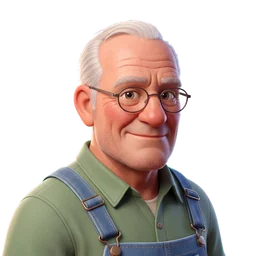
It all began in a short test series called Family Portraits, created by Phil Lawler and Steve Harris and aired on the daily Focus on the Family broadcast with Doctor James Dobson. That series introduced listeners to Odyssey, and, more important, to the people who lived there. One of them is a quirky gentleman who likes to walk while he talks. He moved to Odyssey back in 1971 and fell in love with the place the first time he laid eyes on it. His name is John Avery Whittaker, though most of his friends call him Whit, and his genuine kindness and deep love for people quickly made him the center of everything.
The very first episode showed the pattern that all the others would follow. Davey Holcomb breaks a machine in Whit's workshop and wants to slink away and stay out of everyone's path forever. Whit will not let him. Since Davey broke the lever, Whit says, Davey is going to fix it, because you cannot go through life running away from your problems. You have to face them, deal with them, and make the best of it. It is called responsibility.
That kind of wisdom did not come cheaply. As a boy, Whit lost his mother and had to live with a stepmother who had gone blind, and who gently told him her trouble was her own concern and not his. As a young man he was hurt in wartime trying to save a transport full of soldiers. Later, as a husband, he sat in a doctor's office and heard that his wife's illness had gone too far to treat.
Her death came right in the middle of a fight over an old rundown building called the Fillmore Recreation Center. Some people in town wanted it torn down; his wife had been one of those who wanted it saved. Whit was too grief-stricken to care, until Tom Riley and a young police cadet came to see him and told him something he did not want to hear - that his wife had always believed he would help if he could. At the meeting where the building is about to be sold, Whit stands up, tells Philip Glossman there is another bidder after all, and outbids the developers by half a million dollars. The plan he reads aloud describes a place of adventure and discovery, filled with books and activities, fun and games, arts and crafts, and uplifting conversation, where kids of all ages can just be kids. That is how Whit's End came to be.
Room after room of it turns up in the clips. There are gadgets and displays that exist for no reason except that kids might enjoy them, a private workshop packed with tools, and Kids Radio signing on for the first time with Brad Dillard at the microphone and Sherman throwing the switch. The old auditorium becomes a theater, where Robyn Jacobs helps hand out scripts for a play Whit wrote himself. In the Bible Room a mirror looks dark and dusty until someone says a Bible verse to it, and Philippians 4:13 makes it blaze with light. The shop can be dangerous too. A hidden door that nobody knew about opens onto a musty closet, and while Jami Martin holds the flashlight, a wall swings back to reveal not one secret panel but two, with a telescope between them. Another night, a stranger is waiting in the dark downstairs.
Whit's greatest hope for the shop was that the Bible would come to life there, and it does. An invention he calls an environment enhancer adds sound and music to a story until listeners feel they are standing in it, and suddenly Goliath is roaring across a valley at a boy with a sling, and King David is answering that he comes in the name of the Lord Almighty. The Imagination Station looks like a time machine out of the comics, but climbing in and pressing a couple of buttons drops Digger Digwillow into Jerusalem at Passover, where a young servant named John Mark speaks of his master beyond the door, the one everyone in the land has heard of. Digger stays long enough to watch the crucifixion, and to ask why they are doing this to someone who did nothing wrong.
The inventions bring kids in, but the people keep them there. Connie Kendall wrestles a mirror that will not stop and shuts it down her own way, admitting afterward that Whit probably would not have done it quite like that. Eugene Meltsner walks in the door for the first time, suggests a more efficient replacement for the little bell above it, introduces himself to Whit and Tom Riley as a recognized genius, and cheerfully explains what the word howdy actually means.
Mostly, though, it is families. Mary Barclay lets Jimmy Barclay talk her onto a ride that turns out to be far higher than she expected. Isaac Morton is about to be pounded flat when the ice underfoot starts cracking and someone screams for Peter Dillon to get clear. Robyn Jacobs and Oscar Peterson show off a paper mache volcano cut in half so the lava can be seen flowing through the caverns, with a dimmer switch to control it. On a camping trip, Tom Riley rubs sticks together on principle while Whit stands by with matches, and Eugene solves the problem with an explosion and an offer of hot cocoa.
In laughter or in tears, the gang always seems to learn something. The last clip is the quietest. Jimmy Barclay comes home late and scared, admits he spent all his savings and disobeyed, and says he deserves whatever punishment is coming. George Barclay tells him they will talk about punishment later. Right now he wants a hug. Being punished, he says, does not mean he is not loved, and no matter what happens, Jimmy can always come home. That, more than any invention, is what the adventure has been about all along.
Around the story
The host segments that opened and closed the broadcast.Chris opens the programme by wondering how many different ways an announcer can lead into a show's opening theme, and then tries several of them out in a string of playful little scenes. In a garden, a gardener shows her a lovely flower whose fancy Latin-sounding name simply means "the theme." Another character receives her tape kindly, rattles off a pile of old sayings, and tells his assistant Sam to play it. Chris also works the theme into punching a secret code at a bank machine, watching a big parade with marching bands and balloons where the Adventures in Odyssey float rolls by, and admiring an artist's painting called a fantasy on the show's theme. She then explains that all this silliness points to what today's story is about - the adventure behind the adventure, because Adventures in Odyssey has a history of its own. She tells how it began as a thirteen-week test series called Family Portraits, created by Phil Lollar and Steve Harris and aired on the Focus on the Family broadcast, which introduced listeners to the town of Odyssey, its people, and a quirky gentleman named John Avery Whittaker.